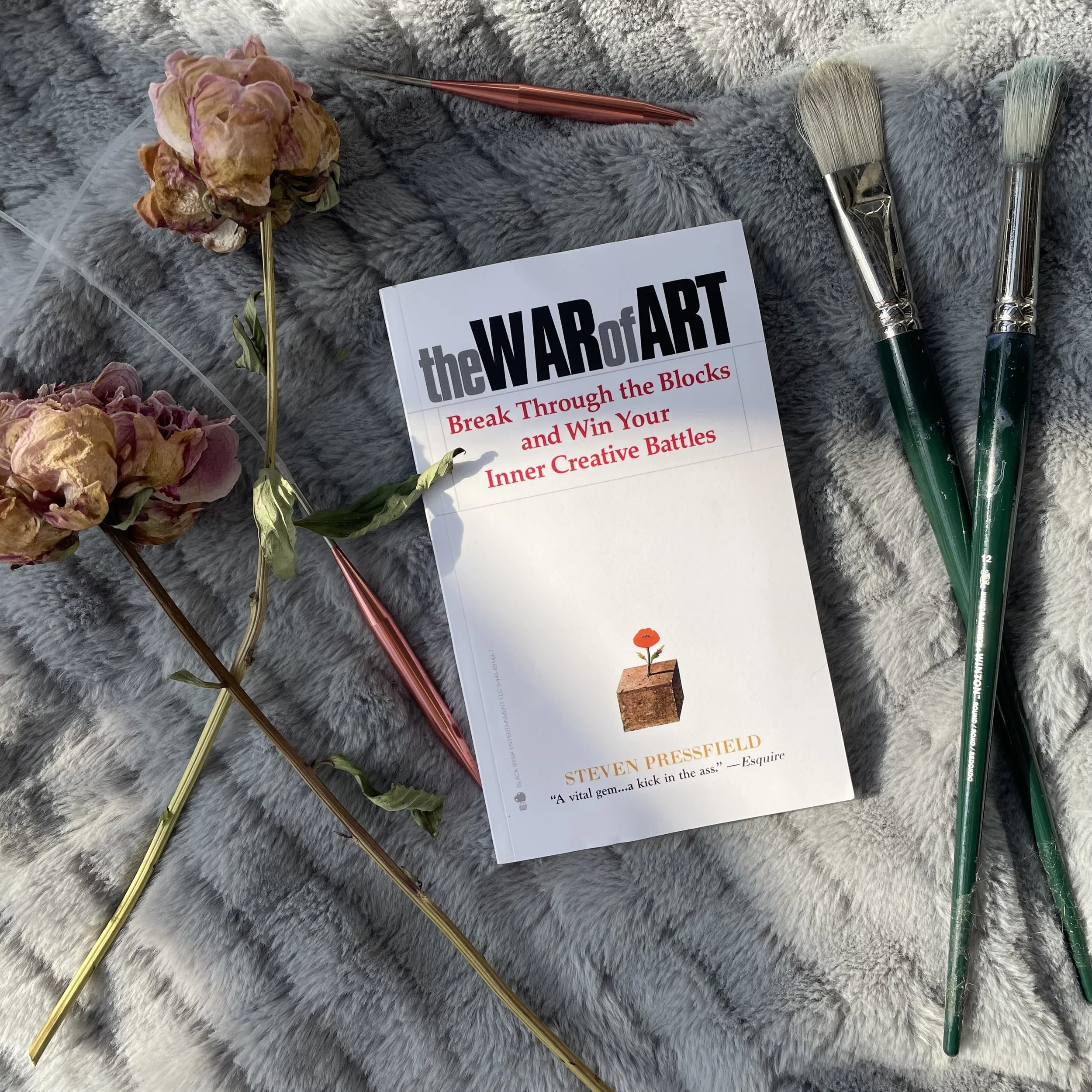
If you’ve ever sat down to work on something meaningful—writing, building a business, creating art, starting a project, doing anything that creates anxiety—and somehow ended up doom scrolling your phone, reorganizing your desk, checking the fridge, and Googling whether otters hold hands while they sleep, congratulations. You’ve met Resistance.
That’s the central villain in The War of Art by Steven Pressfield, and honestly, it's killing your motivation and leaving you anxious and unfulfilled.
This book is short, blunt, occasionally out there, and sometimes feels like a coach yelling at you through a megaphone. Try not to take it personally because you will feel called out.
Let me tell you the story of your resistance.
Part 1- Resistance- The Sneakiest Little B’tch You’ll Ever Fight
Pressfield opens the book with the idea of Resistance, which he describes as an invisible force that keeps us from doing the things that would actually make our lives meaningful.
Not the easy stuff. Not the quick dopamine stuff.
The real stuff.
Resistance shows up whenever you try to do something that doesn’t give you instant gratification.
Examples:
Sitting down to work on the project you care about… and suddenly checking your phone. The impulse is strong.
Deciding to write… and then somehow researching “the best agendas for writers” for two hours. It's productive to get organized right?
Planning to start a business… but first watching 19 YouTube videos about productivity systems- anything to avoid actually taking the steps.
Resistance loves cheap dopamine.
Phones. Gossip. Substances. Attention. Anything that feels productive without actually being productive.
And the most brutal part?
Resistance gets strongest near the finish line.
Pressfield basically calls this the 95% club—the place where people almost finish something… then mysteriously stop. I am the president of this club, just ask my husband.
A novel that never gets edited. A business idea that never launches. A course that stays at 95% complete forever.
(All the videos I have made to share and am afraid are not good enough)
Resistance knows the finish line is dangerous.
Because finishing means exposure, judgment, and growth. It makes sense why we want to avoid this, it could be painful
Fear Is Actually a Compass
One of my favorite ideas from the book is that fear isn’t a warning sign — it’s a direction sign.
Pressfield argues:
The more something scares you, the more it might be exactly what you're supposed to do.
That project you keep avoiding? The one that feels too big or too public?
Yeah… that one.
Fear often points directly toward your actual calling. And what is scarier than failing at something that really matters to you?
Waiting Until You're “Ready” Is a Trap
Another brutal but honest idea:
You can’t wait until you’re healed, confident, or motivated before doing your life’s work.
Waiting to feel ready is just Resistance wearing a lab coat and pretending to be wisdom. In therapy land, we call this rationalization or intellectualization.
Pressfield even goes so far as to say that this kind of delay can actually make people sick—because you’re constantly suppressing the thing you know you’re meant to do. (When the Body Says No by Gabor Mate is on the list to review and makes a good argument for this idea. Stay Tuned)
Your brain knows.
And it will keep bothering you about it.
Why We Criticize Other People
Here’s one of my favorite parts of the book as someone who views therapy from the lens of interpersonal relationships.
Pressfield claims that people who criticize others are usually reacting to their own Resistance.
When someone else pushes past fear and creates something real, it reminds us that we could do the same.
And our ego does not enjoy that reminder, just check any comment section on influential social media accounts.
People who are fully engaged in their own authentic work?
They usually don’t spend much time tearing other people down.
They’re too busy making stuff.
Part 2- Turning Pro (Even If You Don’t Feel Like It)
The second section introduces the idea of a "professional":
According to Pressfield, a professional isn’t defined by fame, talent, or money.
A professional is simply someone who commits to the work.
That’s it.
Professionals:
Show up every day
Stay at the job all day
Play the long game
Get feedback
Continue mastering their craft
Keep a sense of humor about the whole thing
The amateur waits for inspiration and motivation.
The professional gets to work and lets inspiration catch up later.
The Surprisingly Simple Formula
Pressfield’s advice is actually pretty straightforward:
Do your vocation for love (even if you make money from it)
Be patient, great work takes time
Maintain order and organization
Don’t overthink the work or you'll freeze
Do it scared
Stop making excuses
Accept the hand you're dealt and play it well
Master your craft
Ask for help when you need it
Don’t take feedback personally
Keep evolving
In other words:
Show up. Do the work. Repeat forever.
Not glamorous.
But effective.
One Big Decision
Pressfield argues that the biggest moment in anyone’s creative life is simply this:
The decision to turn pro.
It’s not about talent.
It’s about commitment.
You stop negotiating with Resistance and start treating your work like a job, even if nobody is paying you yet.
Part 3- The Weird (But Interesting) Spiritual Stuff
The final section of the book takes a more spiritual turn.
Pressfield argues that inspiration comes from something beyond our everyday ego—what he calls the Self.
According to this idea:
The ego wants safety, status, and approval.
The self wants growth, creativity, and evolution.
Resistance is basically the ego protecting the status quo.
Your deeper self, meanwhile, is trying to push you toward creating things.
Ideas, dreams, and creative impulses come from this deeper place.
Our job is simply to get out of the way and let them through.
Whether you interpret that spiritually, psychologically, or just metaphorically, the message is powerful.
Creativity doesn’t come from forcing brilliance.
It comes from showing up and listening.
The Big Question the Book Leaves You With
One of the most powerful questions from the book is this:
If you had no one to impress, what would you create?
No audience. No social media. No approval.
Just you and the work.
That question alone might reveal more about your real interests than anything else.
Final Thoughts
The War of Art is one of those books that feels like a friendly slap in the face.
It reminds you that:
Procrastination isn’t laziness — it’s Resistance
Fear often points toward the work that matters most
Waiting until you're ready is a trap
Professionals simply show up and do the work
And maybe most importantly:
The world doesn't need more people thinking about creating things.
It needs more people actually creating them.
So if you're sitting on an idea, a project, a business, a book, or something you've been wanting to make…
This is your sign.
Put your phone down now!
Resistance is already winning today.
Don’t let it win tomorrow.
Want to work on motivation, energy, or what's getting in your way?
Our team is here to help — reach out to schedule a session.