
Welcome to Our Mental Wellness Blog
Post Categories

Doomscrolling: A Very Normal Response to a Genuinely Overwhelming World
You open your phone to check one text. Forty minutes later you've read about three separate crises, argued with a stranger in your head, and somehow feel both more informed and worse than when you started. Welcome to doomscrolling… and if you do this, you are definitely not alone.

ADHD: Or, Why You Have 47 Open Tabs and Also Forgot to Eat Lunch
You know that feeling when you walk into a room with a clear purpose and immediately forget what that purpose was? Or when you start cleaning your kitchen and somehow end up reorganizing your bookshelf by color at 11pm? Yeah. Let's talk about ADHD.

Now Offering EMDR Therapy: A New Way to Heal from Trauma
EMDR is an evidence-based therapy approach specifically designed to help the brain process and heal from traumatic or distressing memories. Unlike traditional talk therapy, EMDR uses bilateral stimulation — typically guided eye movements — to help the brain reprocess memories that have gotten "stuck," reducing the emotional charge they carry.

Why Nature Is Good Medicine for Your Mental Health
Nature doesn't ask anything of you. It offers a break from notifications, deadlines, and feeling overwhelmed. You can recharge from the sunlight, fresh air, and the quiet rhythm of things growing at their own pace. It turns out that stepping outside is more than just a nice break, it's genuinely good for your mental health.

How Do You Know Therapy Is Working?
You started therapy. You found a therapist, survived the awkward first session where someone asks, "So tell me about yourself," and now you've been going for a while. Naturally, you're wondering:
Is this actually working?
It's a fair question. Most people secretly expect therapy progress to look like a movie montage. A few deep conversations, some emotional music, maybe a meaningful stare out a rainy window... and boom. You're healed.

Therapy for Empaths: Why Caring So Much Can Leave You Completely Exhausted
If you've ever been told you're "too sensitive," this one's for you.
Maybe you're the person everyone calls when they're struggling.
The friend who remembers birthdays.
The coworker who notices when someone seems off.
The family member who somehow ends up being everyone's unofficial therapist.
You care deeply. And honestly? That's a beautiful thing. But if you're reading this, there's a good chance that caring has started to feel less like a gift and more like a full-time job. You might identify as an empath.

What Is Somatic Therapy And Why Your Body Holds the Key to Healing
When we think about therapy, we often imagine talking through our problems. But what if your thoughts and words are only part of the story? What if your shoulders carry years of grief, your jaw holds unspoken rage, and your chest shelters a fear you never gave a name? This is the territory that somatic therapy explores and why it's becoming one of the most powerful approaches in modern mental health care.

Attachment Style Combinations- What Happens When Different Styles Fall in Love
We've spent five posts understanding the four attachment styles individually. Now for the part everyone's been waiting for: what actually happens when they meet each other in a relationship? Because attachment doesn't happen in a vacuum — it happens in the dynamic between two nervous systems, each with their own history, their own fears, and their own very confident opinions about how relationships should work.

Disorganized Attachment- When You Want Love and Are Terrified of It at the Same Time
Disorganized attachment — also called fearful-avoidant — is the style that doesn't get talked about as much as the other three, possibly because it's harder to summarize in a meme. Anxious attachment gets "I'm clingy and I know it." Avoidant gets "I need space." Disorganized gets "I want you to come closer so I can panic about how close you are and then push you away and then feel devastated that you left."

Avoidant Attachment- "I'm Fine, I Just Need Some Space"
If you have avoidant attachment and you're reading this, first of all — welcome. The fact that you're here at all is a minor miracle given that "reading a therapy practice's blog post about your emotional patterns" is not exactly in the avoidant comfort zone.

Anxious Attachment- When Love Feels Like a Constant Emergency
Let's talk about the attachment style that loves so hard it occasionally short-circuits. Anxious attachment is the experience of craving deep connection while simultaneously being convinced, on some level, that it could disappear at any moment. It is warm and generous and loyal and also absolutely exhausting — mostly for the person living inside it.

Secure Attachment- What It Actually Looks Like (And How to Get There)
If you've ever been in the presence of a couple who can have a disagreement without one person shutting down completely and the other catastrophizing the end of the relationship — you may have witnessed secure attachment in the wild. It's rare enough to feel almost suspicious at first.

Why You Love the Way You Love- An Introduction to Attachment Styles
Have you ever wondered why you text back immediately and then hate yourself for it? Or why you genuinely need three business days of alone time after an emotionally close conversation? Or why you somehow always end up in relationships with people who are emotionally unavailable — and then are shocked, every single time?

SMART Goals- Because “I Want to Do Better” Is Not a Plan
Every January (and honestly every Monday), millions of people set goals with all the enthusiasm of a golden retriever spotting a squirrel — and about the same follow-through. The problem usually isn't willpower. It's that the goal itself was never built to succeed. Enter: SMART goals. It's a framework that's been around since the 1980s and is still relevant because, well, humans haven't changed much.

So You've Decided to Get Motivated (Bold Move)
A therapist-approved guide for getting off the couch — mostly
Motivation is a lot like that one friend who says they'll "definitely show up" to help you move — enthusiastic in theory, suspiciously absent when it counts. The good news? You don't have to wait for motivation to arrive before you start. Here's what the science actually tells us.
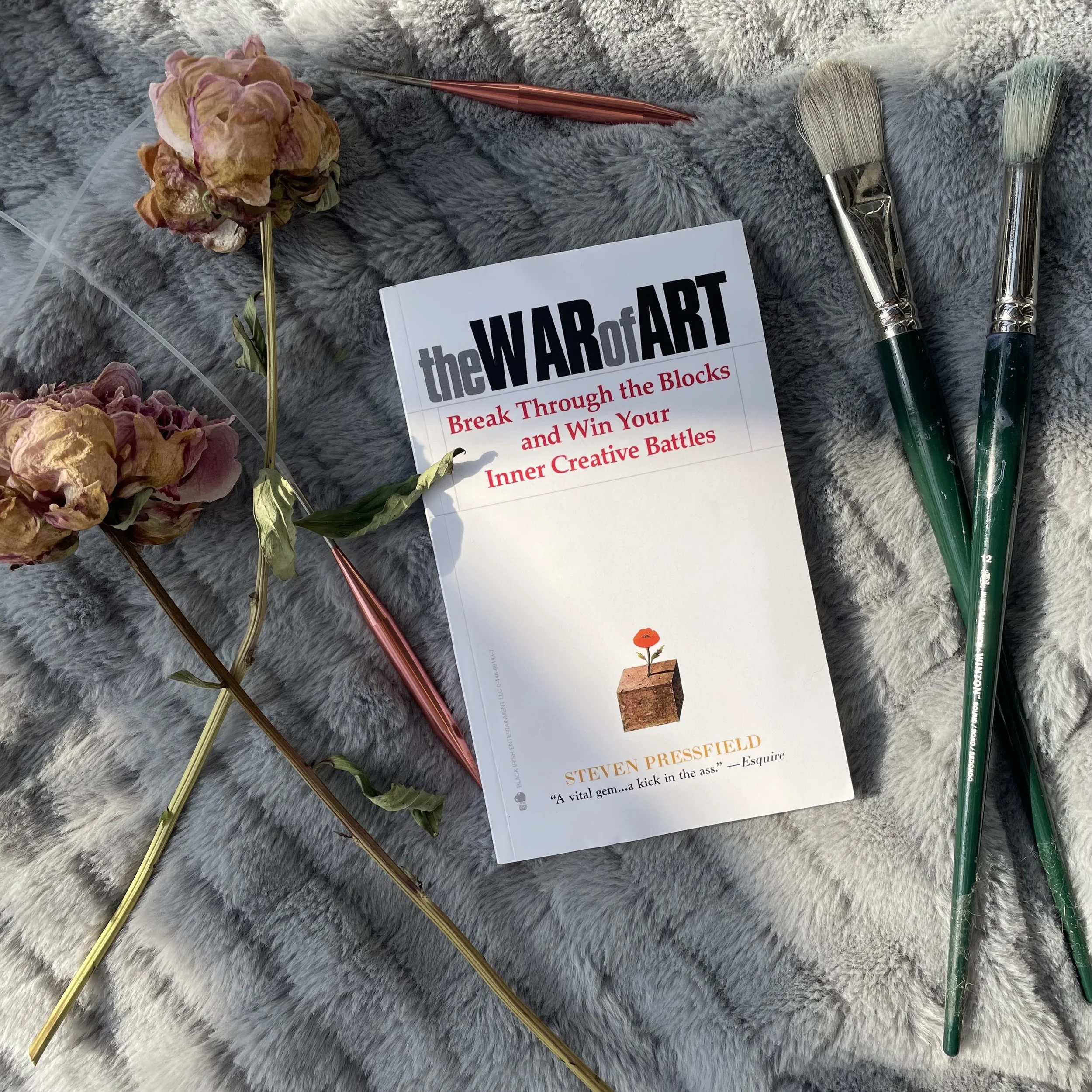
Book Review- The War of Art by Steven Pressfield
If you’ve ever sat down to work on something meaningful—writing, building a business, creating art, starting a project, doing anything that creates anxiety—and somehow ended up doom scrolling your phone, reorganizing your desk, checking the fridge, and Googling whether otters hold hands while they sleep, congratulations. You’ve met Resistance.
That’s the central villain in The War of Art by Steven Pressfield, and honestly, it's killing your motivation and leaving you anxious and unfulfilled.
This book is short, blunt, occasionally out there, and sometimes feels like a coach yelling at you through a megaphone. Try not to take it personally because you will feel called out.
Let me tell you the story of your resistance.

Rushing Around is Making Your Anxiety Worse
In a world that celebrates hustle, multitasking, and “doing the most,” slowing down can feel… wrong. Almost rebellious. But if you’ve ever noticed your shoulders creeping up to your ears, your jaw clenching, or your heart racing while you’re just trying to answer emails, your nervous system has something important to say.
Cognitive Processing Therapy (CPT) - A Proven Approach for Healing
Trauma can shape how you see yourself, your relationships, and the world around you. Many people find themselves stuck in cycles of fear, guilt, shame, or self-blame. Cognitive Processing Therapy (CPT) is an evidence-based trauma therapy that helps individuals break free from these patterns and heal.

How to Tell If You Need Couples Counseling
Relationships are complex and require effort, communication, and understanding to thrive. Even the healthiest couples may encounter challenges that test their bond. Couples counseling can be a valuable resource for navigating these difficulties, but how do you know when it’s time to seek professional help? This blog post will outline key signs that indicate you and your partner might benefit from couples counseling.

Tips for a Better Night's Sleep
Sleep is a fundamental aspect of our health and well-being, yet many people struggle with getting adequate rest. Sleep hygiene refers to the practices and habits that are conducive to sleeping well on a regular basis. This blog post will provide an overview of sleep hygiene and offer practical tips to help you improve your sleep quality.