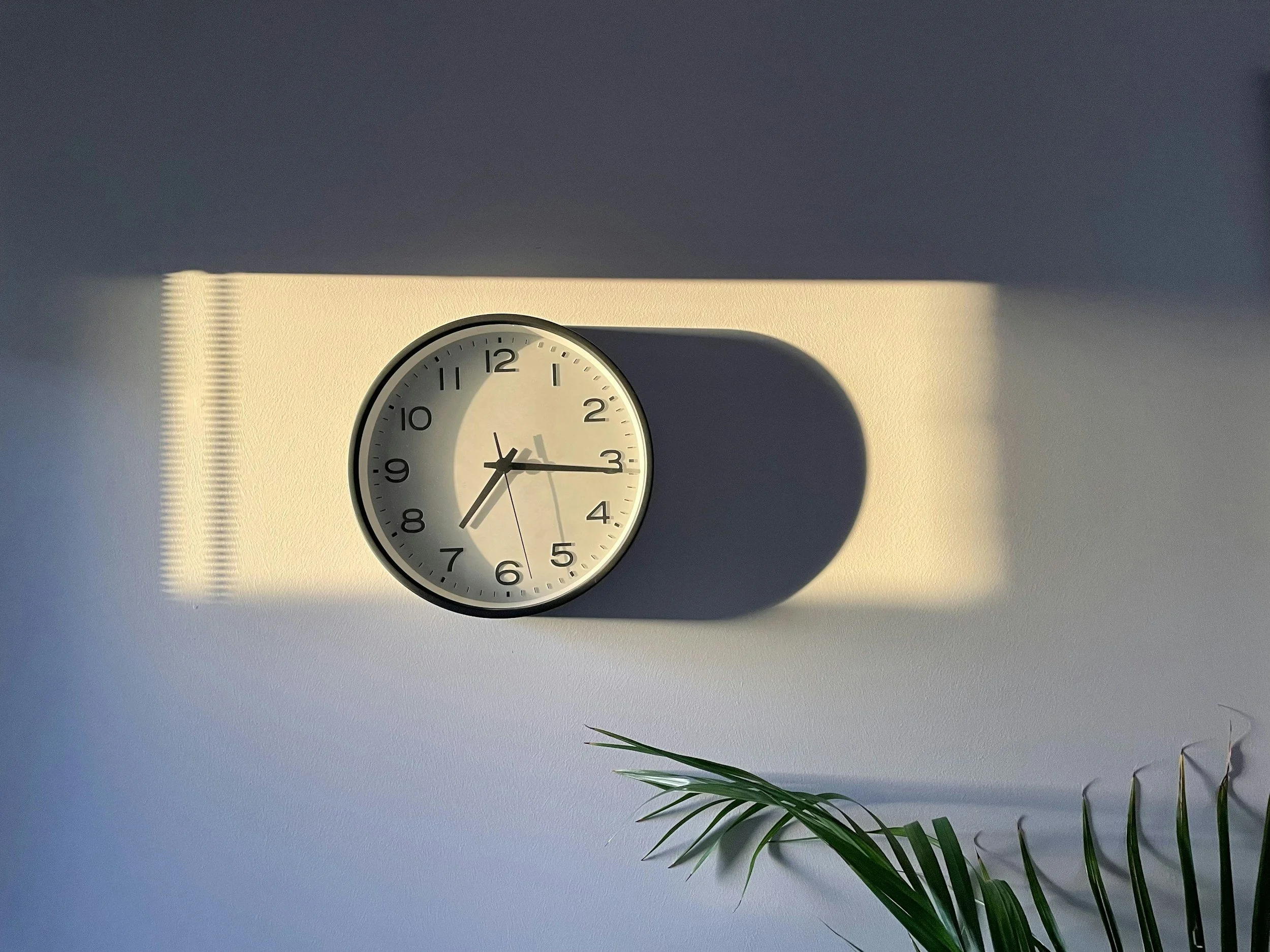
A survival guide to daylight saving time, from the therapists at Sonder Counseling
On November 1, we set the clocks back and were promised an extra hour of sleep. Lovely. So why are you still awake at 11 p.m. like a raccoon in a garage, then staring at the ceiling at 4:45 a.m. like it owes you money?
If the time change is still messing with you a week later, you're not dramatic, and you're not broken. Your body clock is doing exactly what body clocks do. Here's what's going on, and what actually helps.
What's happening in your brain
Your internal clock (your circadian rhythm) runs mostly on light. When the clocks shift, your schedule moves an hour but your biology doesn't get the memo. Dinner feels late, bedtime feels early, and your morning alarm lands at what feels like the wrong time. Most people need several days to a couple of weeks to fully adjust.
Then there's the darkness. Suddenly it's pitch black at 5 p.m., which your brain reads as 'time to hibernate.' Less daylight can mean lower energy, a flatter mood, and more irritability. That's common, and it's worth taking seriously, not just pushing through.
Signs the time change is getting to you
Waking up too early, or struggling to fall asleep
Afternoon slumps that feel like wading through pudding
Short fuse, snapping at people you love (and the dishwasher)
Craving carbs and the couch in equal measure
Trouble focusing, especially for folks who already have ADHD or anxiety
Seven things that actually help
1. Get outside within an hour of waking. Morning light is the strongest signal for resetting your body clock. Take your coffee on the porch, walk the dog, or just stand by a bright window. Even a cloudy Michigan morning counts.
2. Hold your wake-up time steady. Sleeping in to 'make up' for the change keeps your clock confused. Get up at the same time every day, weekends included, for a week or two.
3. Shift in small steps. If you're still off, move your bedtime and wake time by 15 minutes every couple of days instead of lurching a full hour.
4. Dim the lights at night. An hour before bed, lower the lights and put the phone down or turn the brightness way down. Your brain should be getting 'nighttime' memos, not a noon-sun lighting package.
5. Move your caffeine and your dinner earlier. Cut caffeine after noon and eat dinner a little earlier. Your body uses meal timing as a clock cue too.
6. Skip the long nap. If you need one, keep it under 30 minutes and before 3 p.m. A two-hour nap is basically a second bedtime that ruins the first.
7. Build a tiny evening ritual. Tea, a shower, stretching, a boring book. Doing the same few things each night tells your body that sleep is coming.
Be kind to yourself
You will likely feel a little off for a few days. That's normal. Lower the bar for a week: fewer commitments, easier dinners, earlier nights, and a little extra patience with yourself and everyone else.
When it's more than the clock change
If low mood, loss of interest in things you usually enjoy, heavy fatigue, or changes in sleep and appetite last longer than two weeks, or they're getting in the way of work, school, or relationships, that's worth talking to someone about. Seasonal changes affect many people, and support works. You don't have to white-knuckle your way to spring.
At Sonder Counseling, our licensed therapists help with sleep struggles, anxiety, low mood, ADHD, and the general weight of dark evenings. We see clients in person in Troy and Detroit and online across Michigan, and every new client starts with a free 15-minute consultation.
Ready to feel more like yourself?